
Caring for Cats
Tips and recommendations from a not-so crazy cat lady
Having owned and fostered dozens of cats, they have taught me so much. I've gathered a collection of practical tips, clever tricks, and personal insights to help others navigate the joys and challenges of caring for cats.
Whether you're dealing with odd behaviors, aiming to keep your cat fit and happy, or just looking for fresh ideas, this page is packed with realistic advice from a seasoned cat owner. You may pet-parent differently than I do, and that's okay!
Here's what has worked for me. These are general guidelines and are not a substitute for recommendations from a licensed veterinarian.

My biggest takeaway is: Don't automate your cat care (automatic feeders, automatic litter boxes, automatic toys, and even free-feeding). The more involved you are in your cat’s daily routine, the stronger your bond will be and the easier it will be to spot changes in their health and behavior.
Topics:
Diet and Feeding
Here is my spiel on feeding cats:
-
Feed them twice a day
-
No free-feeding or automatic feeders
-
Feed a combination of dry and wet (kibble plus canned food or soaked in water)
-
Keep them lean (5-6/9 Body Condition Score - see chart below)
-
Recall train them
Do this, and I can almost guarantee you'll have healthier, happier cats.
Continue reading to see why I live and breathe by these rules.

A lean and healthy cat with a 5/9 Body Condition Score
Cat Food:
There's always a great debate on what the best cat food is. The truth is, most brand-name cat food that you can buy at the grocery store and is labeled for cats is sufficient. Try to avoid kibble with excessive dyes or colors as this can irritate their stomachs. And if you have a kitten, use food labeled for kittens until they're about 10-12 months old. For more info about feeding and caring for kittens, click here.
I've been feeding Friskies and/or Purina One cat food to my cats my whole life and they do great. The key is keeping them at a healthy weight. There really is no significant benefit to buying the top-of-the-line, expensive food brands when you don't have to. However, if your cat has an underlying health condition and/or needs specific nutritional requirements as recommended by a vet, then you should absolutely use that food.
How Much Should You Feed?
On average, most cats require about 100- 300 kcal per day. That's about 1/2 cup - 3/4 cup of dry kibble total per day. However, if your cat is overweight, obese, and/or over 15lbs, this may be different. If you want to start your cat on a weight-loss plan, then you should consult with your veterinarian first, because losing too much weight too quickly can cause serious health problems like hepatic lipidosis in cats. When measuring food, be sure to always use a standard measuring cup for consistency.
I feed Purina One adult cat kibble (rotating flavors) and I soak the kibble in warm water. Here's how much I fed my cats:
-
Sabine: 6.5 lbs, 2 yrs old, spayed female, indoor only, very active and healthy, BCS 5/9
-
1/4 cup twice a day, soaked in warm water
-
-
Wendy: 8.8 lbs, 6 yrs old, spayed female, indoor only, moderately active and healthy, BCS 5/9
-
1/4 cup twice a day, soaked in warm water
-
-
Benny: 10lbs, 6 yrs old, neutered male, indoor only, moderately active and healthy, BCS 5/9
-
Heaping 1/4 cup twice a day, which equals out to 3/4 cup total per day, soaked in warm water
-
Here's an example using wet and dry food:
-
Blackie Joe: 9 lbs, 12 years old, neutered male, mildly active, healthy, BCS 6/9
-
1/8 cup kibble, in the morning, then 1/8th cup kibble plus 1/4th of a can of wet food (5oz can) at night
-
Free-Feeding:
Personally, I don't like the idea of leaving out food and not being able to keep track of when and how much my cats eat. Free-feeding is the root cause of feline obesity since cats don't know how to control themselves. Their instincts tell them that if they find food, they need to eat as much of it as possible and quickly because they don't know when their next meal may be. When a cat doesn't eat all the food provided to them, it's likely because they're being over-fed. Not monitoring your cat's eating habits on a day-to-day basis can lead you to miss early indicators of illness and disease.
Disadvantages of Free Feeding:
-
Leads to overeating and obesity
-
Cannot monitor how much they eat a day
-
Unable to monitor changes in appetite (which may indicate health problems)
-
Can lead to fighting and/or resource guarding in a multi-cat household
-
Feeding only dry food with no added moisture can lead to dehydration and urinary crystals
-
Food left out all day gets stale and can grow bacteria or mold
-
Takes the fun out of eating
Instead, feed two meals a day on a relatively routine basis, just like you would a dog. It takes 5-10 minutes total and allows you to kep track of how much they eat every day and if their appetite changes. Because I monitor my cats at each meal, if they don't finish their food, I know immediately that something might be wrong, and that alerts me to monitor them for signs of illness for the next few days. Feeding meals also lets me practice their recall. I also just enjoy feeding my cats and seeing them get super excited for meal time, which aids in metabolism. In a multicat household, you may need to separate cats when feeding. I feed one in the kitchen, one in the hallway, and one gets put in the bathroom, or else she'll steal the other's food. They take at most 7 minutes to finish eating. I can easily monitor their appetites, and when they're done, I let the other one out of the bathroom.
*Note*: A cat with a healthy body weight and body condition score (see chart under Feline Obesity) will beg for food; this is normal. Just like a kid will beg for ice cream, it doesn't mean they're starving to death; they're just greedy and you must not give in. It is totally normal for them to want extra food, it does not mean you aren't feeding them enough. Again, just because a cat begs for more food does NOT mean you are starving them.

Food Bowls:
Cats prefer shallow and wide bowls to avoid having their whiskers rub against the sides. Stainless steel bowls are best since they're resistant to wear and tear, but I've have plastic and ceramic bowls too and those are just fine. However, if your cat is having problems with eating or allergies or unknown health conditions, you may want to consider switching to stainless steel. Some people wash their cat's food bowls once a week or more, and to those people I say more power to you. My cats lick their bowls clean and if not my dogs lick them clean, so I never wash their bowls unless for some reason they get dirty. I do, however, wash out their water bowls and fountains regularly.
Table Scraps:
I'm not advocating for people to feed their cat human food, especially if you never have before, but since most people do anyway, here are some guidelines to keep them safe and healthy. I mean, what's the point of living if you don't get to enjoy table scraps from time to time? That being said, I am very specific about what types of scraps they get and how much. Be aware that this usually results in bad habits, like your cats getting up on tables and hovering like vultures when you eat, so if you don't want that, don't feed table scraps.
Introducing cats and kittens to a variety of foods in small amounts while they’re young can actually strengthen their digestive systems and reduce sensitivity to diet changes as adults. This includes rotating food brands and, at times, offering small table scraps. When feeding human food to cats, always use your best judgment. Don't feed anything that is overly seasoned, processed, sweetened, or sauced, and no foods that are toxic to cats, such as onions, garlic, grapes, raisins, chocolate, etc.. (Toxic Foods for Cats). If your cat has allergies or other underlying health conditions, consult with a veterinarian first.
When handing out table scraps, I'm always using cooked and minimally seasoned pieces of food, such as eggs, chicken, cheese, vegetables, or plain Greek yogurt, for example. And always in moderation. Each piece is no bigger than my thumb, and usually just one or two pieces per cat.

Here is the tiny amount of non-fat, plain Greek yogurt that I give to my cats

Plain white American cheese

This is the size piece of chicken I give out and I only give them 1 or 2 pieces total. This is cooked pulled chicken with minimal seasoning.

Recall:
A recall command is a specific word or sound you use to call your pet, teaching them to come to you when they hear it. This is an example of classical conditioning. By consistently using this command during positive experiences, such as mealtime, your pet learns to associate the cue with something rewarding.
Over time, they’ll respond to the recall even when food isn’t involved. This makes recall a powerful and effective training tool. Once trained, recall is very useful when you can't find them in the house or you need them to come inside from the patio, or in emergencies when you need to find and secure them quickly. I find this especially useful if you have indoor/outdoor cats and you can call them home for dinner.
Feline Obesity
It is estimated that over 50% of all pet cats are overweight or obese. Not only does obesity cause a variety of health problems and finicky eating habits, but it's also painful. Cats are nimble creatures. They love to run and jump and groom themselves. One extra pound of weight on a cat is equivalent to nearly 15 extra pounds on a human. This extra weight can be extremely harsh on a cat's tiny joints, predisposing them to arthritis, which can be especially painful for older cats. The majority of cats should weigh less than 14 pounds. Obesity also significantly decreases a cat's lifespan and can lead to a variety of other health problems, including diabetes. Diabetic cats need insulin injections twice a day, usually for the rest of their life and can be a challenge to manage. Obese cats also have a difficult time grooming themselves because they can no longer reach their back due to their size, which leads to unkempt coats and matted fur. Matted fur itself can cause a variety of problems, like nasty wounds and pain from pulling on the skin so tightly. When this happens, they often need to be shaved down to get rid of the mats.
The number one reason for feline obesity is overfeeding. Luckily, that is an easy fix through proper portion control, but it can take many months to help them lose weight safely. If an obese cat loses weight too quickly, they can develop other health issues, such as hepatic lipidosis, a life-threatening condition. Make sure to consult with a veterinarian before starting your cat on a weight-loss plan.
When assessing your cat's Body Condition Score (BCS), you'll want to look at three main areas: their ribs, their spine, and their waistline. With an ideal body weight, you should be able to easily feel their ribs and points of their spine, but not see them. When feeling the ribs, they should have minimal fat covering them. You should be able to feel and count each one. I like to say it should feel similar to feeling the bones on the back of your hand. When looking at them from above, they should have a waistline that tucks in a the hips.

Marley was brought to the shelter at a whopping 29 lbs! Her fur was matted and her entire back had to be shaved. She was also at risk for hepatic lipidosis due to severe obesity.
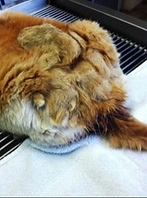

Overweight cats cannot reach their back-end to groom, causing matted fur. Matted fur can cause severe skin irritation and even wounds if left untreated.


BCS: 5/9
BCS: 8/9
Examples:

BCS: 4/9

BCS: 5/9

BCS: 5/9

BCS: 6/9

BCS: 6.5-7/9

BCS: 8/9

BCS: 9/9

BCS: 9/9
Many cat owners think of their pets as “fat and happy,” and it’s easy to see extra weight as harmless when mealtime brings so much joy. But carrying too much weight, especially at a body condition score of 8 or 9 out of 9, can have serious consequences for your cat’s health and comfort.
Excess weight puts strain on joints, making it harder for cats to run, jump, or even groom themselves the way they want to. It also increases the risk of conditions like diabetes. Helping your cat reach a healthier weight isn’t about taking away what they love, it’s about giving them the freedom to move, play, and enjoy life to the fullest, while adding years to the time you share together.

Hydration- Water Bowls & Fountains:
Cats are super finicky about drinking water. Because of this, they're usually not well hydrated. Cats are also prone to developing kidney disease, so staying hydrated is important. Be sure to have at least 2 locations for water in the house- one in the primary living area and another in a location that is quiet and more private that the cat frequents. If you've noticed that your cat loves to drink from faucets or cups in the sink, this may be a sign they aren't getting enough water and/or they don't like their current water bowl. Many cats also experience "whisker fatigue," where their whiskers get overstimulated due to constant rubbing against the sides of deep, narrow food/water bowls. In general, cats seem to prefer water bowls that are shallow, wide, or from a fountain. Here's what I've found to be the best ways to keep your kitties well hydrated:
-
If you use a regular bowl, keep it filled to the brim. My cats love to make a mess with the water bowls, so I keep one upstairs in the bathtub to minimize cleanup.
-
Cat water fountains- These are great at promoting water intake. They're also elevated, making it easier for older cats to drink from. And because cats have a blind spot directly under them, it's hard for them to see where the water line starts, so the rippling effect from a fountain helps them see it better.
-
Elevated water bowls- These shallow bowls need to be refilled daily, but they help prevent whisker fatigue, and my cats love them!
Be sure to wash out and/or change the filters in your cats' bowls and fountains regularly, as they can get slimy and harbor bacteria and even mold.


Litter Boxes
The "gold standard" number of litter boxes is the number of cats you have plus 1. That's just not realistic. I say, whatever works for you and the cats. Currently, I have 3 cats and two litter boxes that are right next to each other, and this works for my cats.
Now, I've also had 9 cats at once. Did I have 10 litterboxes? Of course not, but at night, some cats were separated into different rooms and those cats each had their own box. Then, I had a few spread throughout the house to make sure each cat could do their business without being ambushed by other cats. This is a frequent occurrence in multi-cat homes, so if you have cats who are "bathroom trolls" that hide and attack other cats trying to go potty, you should provide an extra litter box or two in a more private area. Sometimes isolating a cat to a room with their own litter box at night can help, too.
With litter boxes, do what works for the cats. My only rule is, if you're going to have fewer litter boxes than cats, then you should be cleaning them daily, if not twice a day. Cats are very clean animals, and they want their bathroom to be clean too. People often wonder why cats love to use the litterbox right after it's cleaned, and that's just it... because it's clean. Daily cleaning also helps you pick up on their bathroom habits; how much they go and how often. Any sudden changes in either can indicate a medical problem. See my Common medical conditions section.
Choosing the right litter and box:
This is another thing I prefer to do myself and not rely on automated litter boxes for, because I like to be aware of how regularly my cats are pooping and peeing. Again, this is a simple way to monitor their health. The litter box itself should be large enough to fit your entire cat. Most cats prefer uncovered litter boxes. They should be kept in a location that is convenient for the cat but also for you to clean and have decent ventilation. As I mentioned above, if you have cats that ambush each other when they're going to or leaving the box, then you should add another box somewhere more private.
I have used Tidy Cats clumping litter my whole life and have never had any issues. Try to avoid heavily scented litter and ones that produce excess dust because cats can be sensitive to both. But again, the most important thing is to use what works for you and your cats. As long as you have enough litter boxes to fit your cats' needs and keep them clean, you should be good to go. However, if your cat starts having litter box problems, like going outside the box, this is often a sign that your cat is trying to tell you something. Either they don't feel good, they have a medical issue, such as a UTI or back pain, in which case you should seek veterinary care, or they're letting you know that something else is going on behaviorally, like a bathroom troll is preventing them from getting to the litterbox or something is stressing them out in the house. If you've ruled out a medical issue, now is the time to get more litter boxes, change locations, space them out, clean them more often, and try new types of litter.


Unique Cat Behavior
Chattering at birds and lizards: This is a normal cat behavior where they chatter and chirp, usually at a prey animal like birds, squirrels, moths, lizards and things. It's believed to be related to overexcitement and possibly a hunting technique to lure their prey closer.
Pre-Throw up sounds and/or foaming at the mouth: Sometimes, when a cat is about to vomit, they start making this odd, low-pitched yowling sound. And just like people, cats start to hypersalivate right before they throw up, so they'll also start smacking their gums, and you may notice drooling or foaming at the mouth. When I hear or see these signs, I try to move them into a bathroom and prepare to clean up throw up. Cats absolutely love to throw up on anything but the tile floor; they often seek out carpet, rugs, or couches for some reason. And after their first big heave, they'll often run away to find a second spot to throw up. While occasional vomiting and hairballs can be normal, frequent vomiting may be due to an underlying disease, so it's important to have them checked by the vet if you notice this. Read: Why do cats throw up for more information.
Hairballs: We all know that cats get hairballs. Hairballs can be completely normal, but they shouldn't happen all that often. Cats should only have 1-4 hairballs PER YEAR. If they're having more than that, there might be an underlying issue, such as:
-
Stress, allergies, or fleas, causing them to over-groom
-
Gastrointestinal problems: diet intolerance/ food allergies, inflammatory bowel disease (IBD), or other digestive issues.
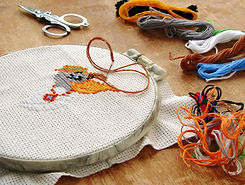
Eating String and Needles: Never leave out string or sewing needles as it poses a danger to your cats. Cats love to play with string, even if it has a sewing needle on it. But when it gets in their mouth, it gets stuck on their sandpaper-like tongues, and they can't get it out. The more they struggle to spit it out, the more they end up swallowing it. Eventually, they swallow most of it and some may even get wrapped around their tongue or the needle gets lodged in the roof of their mouth. Swallowing a string can be a life-threatening situation for cats because it gets wrapped up in their GI tract. Cats often need surgery if they swallow a string, and it's common for them to need a portion of their intestines removed because of it. If you see a string coming out of your cat's butt, do NOT pull it out; this can cause severe internal damage. Bring them to the vet for proper evaluation right away. And it's not just sewing thread, cats will eat all types of string like tinsel, string from cat OR dog toys, or fabric, sometimes even the rope that cat trees have on them. So again, never leave out string, thread, craft or sewing materials.
Phantom Spraying: Neutered male cats sometimes do this, where they back up against a wall or furniture, stick their tail straight in the air, and posture as if they are "spraying," aka urine marking, but nothing comes out. Although no urine is produced, it's still a territorial behavior. I also believe it can be because of overstimulation. I've had a few cats that do this, and it never progressed to actual spraying.
Urine Marking/Spraying: Spraying is a territorial-related behavior, distinct from normal urination and different from accidents outside the litter box. Litter box accidents can signal medical issues like a UTI or a stress response, while spraying is a way of marking territory. When urinating normally, male cats squat similarly to females. When spraying, they stand upright with their tail held high, releasing urine in a horizontal stream while flicking their tail and stomping their back paws (see video). Even neutered male cats, and even female cats (less common), may urine spray, including those neutered before puberty. If your cat begins spraying, it’s typically because they feel the need to mark their territory. Common triggers include the arrival of a new cat, conflict with a housemate, seeing another cat outside, detecting unfamiliar cat scents on you or your belongings, or lacking enough privacy and space at home.
Overstimulation & Tail Swatting: When a cat swats their tail and/or hisses, they're sending you a warning. They’re signaling that whatever you’re doing is overstimulating them and giving you the chance to step back before things escalate. This is how cats show their boundaries, and respecting those signals is essential to building trust. It may start out subtle with only the tip of their tail, but can quickly progress to them swatting their whole tail back and forth. They may also pin their ears back, hiss, or vocalize. When you notice a cat doing this, it's best to leave them alone for a while.
Pawing at water: Many cats paw at their water. One explanation is that because cats have a blind spot directly beneath their nose and by pawing at the surface, they create ripples that help them see where the water begins, preventing them from accidentally dunking their nose. Other cats seem to just like playing in the water, which can be a huge hassle when they're constantly spilling it. My best recommendation if you're having this problem is to try different types of water bowls or fountains and see if it helps. I've resorted to placing one of my cat's water bowls in the tub so they can splash as they please.
Drinking from faucets: Some cats enjoy drinking water directly from a dripping faucet or will lick up the water after you've taken a shower. This is often because the cat does not like its current water bowl, but can also be a behavioral thing. When they don't like their water bowl, they don't drink enough, and when they get dehydrated, they resort to drinking from the faucet or shower floor. If you notice this behavior, I recommend adding a cat water fountain as an additional water source or switching to a shallow, wide, and/or elevated water bowl. You should also add another water bowl to the house in a location that is more private, but still a location that the cat frequents.

"Stink Face": Cats have what's called the vomeronasal organ, located between the roof of their mouth and their nasal sinuses. This organ allows them to smell pheremones and other scents. The opening to this organ is on the roof of their mouth just behind their front teeth so when they smell something funky, like the scent of another cat, they make the classic "stinky face" and hold their mouth open just a little while sniffing around.
Common Medical Conditions and Symptoms to Watch For
Cats are experts at pretending they are fine even when they are extremely sick. Signs of disease and illness can be gradual and many owners don't recognize the signs until they are so severe and the cat stops eating. Below are some of the most common medical conditions seen in cats and the symptoms associated with them. I have also linked each condition to a full article that goes more in-depth. As a general rule, if you notice any sudden changes in your cat's behavior, such as not eating or an increase in eating, drinking excessively, hiding more often, becoming vocal or clingy, straining to urinate, or urinating/ defecating outside the litter box, you should bring your cat to the vet asap.
Male cats can get an obstruction of their urethra for various reasons, such as urine crystals, stress, and inflammation. This can happen in younger to middle-aged neutered male cats. If a cat has a blocked urethra and they can't pee, this is a life-threatening emergency. This cat needs to go to the vet immediately to clear that blockage. If a cat cannot pee, their bladder fills up with so much urine that it backs up into their kidneys, causing all kinds of problems and is extremely painful.
Think of a time when you had to hold in your pee for an extended period of time and how uncomfortable it was. Now imagine having to do that for an entire day or two... Some owners don't notice their cat isn't peeing for multiple days and often mistake it for straining to poop. This is one reason why I advocate for cleaning their litter boxes daily and not using an automatic one. If you don't catch it right away, cats usually need to be hospitalized for 3-5 days on IV fluids with a urinary catheter. Unfortunately, if not caught soon enough, many cats have to be euthanized because of how badly their bladder and kidneys are damaged, and the cost it takes to fix them.
Symptoms include: Straining to urinate, urinating small drops, going back and forth to the litter box multiple times, excessively licking their penis because it stings, especially right after they come out of the litter box. If it's been a day or so, they'll stop eating and become very lethargic, uncomfortable, and even start stumbling when they walk. Sometimes they'll act aggressively if you try to pick them up because their bladder is so full and painful.

As cats get older, many of them start to lose kidney function. Chronic kidney disease mostly affects cats older than 10 years of age. Because cats have such efficient kidneys, they don't normally show any symptoms until their kidneys have lost over 75% function. Owners typically bring their cats in after they've realized their cat is now very skinny and bony and drinking a ton of water. What I've noticed with my cats is that it becomes hard to clean the litter box because the pee is so stuck to the bottom or the sides. This happens because they are now peeing so much that the litter doesn't absorb it all, so now it's like trying to scoop thick mud.
Symptoms include: Increased drinking and urinating large amounts, weight loss, muscle wasting, unkempt fur, and overall not feeling well.
Hyperthyroid disease is fairly common in middle-aged to older cats and we don't fully know what exactly causes it. Essentially, their thyroid gland produces too much thyroid hormone, which greatly increases their metabolism, among other things. Because of this, they often become very hungry, they eat ravenoulsy, but still lose weight. There are various ways to treat this disease, but the most common is a daily pill, and it can sometimes be hard to manage. Click the link above to learn more about hyperthyroidism and the many treatment options it has.
Symptoms include: Increased hunger, ravenous eating, weight loss, greasy and/or unkempt fur, vomiting, enlarged thyroid gland, increased activity such as begging for food or acting restless, increased drinking and urinating, and sometimes changes in how their meow sounds


These are classic examples of what cats with CKD or hyperthyroidism, or both, can look like
It's common for cats to develop both CKD and Hyperthyroidism. Cats with either disease also look very similar- skinny with unkempt fur and probably eating more than normal. If you suspect your cat has either disease, it's a good idea to take them to the vet for some bloodwork.
Feline diabetes is much like human Type 2 diabetes. It occurs when a cat’s natural insulin doesn’t function properly, leading to abnormally high blood sugar levels. Obese cats are the most at-risk. This is a life-threatening condition if left untreated. Cats diagnosed with diabetes can be treated with daily injections of insulin, but this is usually lifelong. Keeping your cat at a healthy weight is the best prevention of this disease.
Symptoms include: Excessive drinking and urinating, weakness in their back legs, unkempt fur, and even weight loss.
Ingrown Nails:
A cat's nails are similar to our fingernails because they grow continuously, but instead of trimming them with nail clippers, they scratch on things to remove the old outer layer and reveal a sharp, new claw.
As cats get older, they can't scratch as forcefully as they used to, preventing them from "trimming" their nails. Once they miss a few trims, their nails become thickened and it becomes more and more difficult to remove the outer layers. This thick nail will continue to grow until it eventually grows into their own paw pad. This is extremely painful for the cat, unfortunately, most cats don't show any signs of discomfort because they're so good at hiding their pain.
If you have an older cat, it's a good idea to check their paws from time to time to make sure this isn't happening. If you do find this, you'll likely need to bring your cat to the vet to have the nail removed from the paw and properly cleaned. If you notice your cat's nails are thickened but not growing into their pads, it's a good idea to have their nails trimmed now before they get to that point.
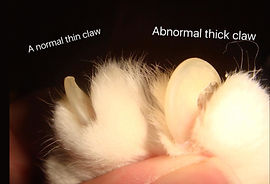


This is what a normal cat nail should look like. Sharp and thin at the point.

Here is a nail growing into a cat's paw pad
Medicating Your Cat
We all know how challenging it can be to pill a cat. This website, Fundamentally Feline, has amazing how-to videos on medicating your cat in a variety of ways. She goes over giving pills, injections, fluids, inhalers, and even taking glucose measurements. For those of you who have cats that are impossible to medicate, I encourage you to watch these videos because she has a lot of good tips that you may not have thought of. I have a cat who is impossible to restrain for medications, but he will eat a pill pocket no problem so long as I break the pill into small pieces and hide them. You can also use high-value treats to hide pills or mix powders with things like tuna juice or pulled chicken. She also has videos on enrichment and how to train your cat so definitely check it out.
If you have tried all the different tips and tricks for hiding pills and restraining them and they are just too difficult to medicate, I recommend using the Superman Towel Wrap to restrain them for this. This is only okay if you're having to medicate for a few day. Having to restrain and fight them in order to medicate will cause them to start associating you with getting meds to the point where they may run away every time they see you or see a towel. If your cat is that difficult to medicate, ask your veterinarian about other medication options such as liquid or gel forms.
Flea Meds
Topical/ liquid flea meds that are labeled for cats are generally very safe. I like Nexgard Plus, Revolution Plus, and Bravecto. Of course, every medication, for pets or humans, has rare side effects so you may have heard people say flea meds cause seizures. Again, these are very rare, and if you've had a bad experience with a specific brand, ask your doctor about using a brand that has a different mechanism of action. NEVER use dog flea meds on cats because it is highly toxic and it can kill them, this includes K9 Advantix and anything with "permethrin" or "pyrethrin" listed as the active ingredient.
To apply liquid flea medication, part the hair and place it directly on the skin at the base of the neck so your cat can’t lick it off. Cats often dislike the smell and may drool, gag, or even run around frantically if they taste it, but this reaction is common and usually harmless. Keep them in a contained space until they calm down, which typically takes 15–20 minutes. If your cat shows severe signs—such as lethargy, trembling, or seizures—wash the medication off immediately and seek veterinary care. If your cat doesn't tolerate topical flea meds, ask your veterinarian about switching to an chewable form.
Preparing for a Vet Visit:
The Cat Carrier:
Cats hate going to the vet and often dislike carriers because they associate them with vet visits. To reduce stress, keep the carrier out at home regularly and use it as a den or bed so it feels familiar. Don't put it in the back of the storage closet, only to be seen again at the next vet visit. Choose a carrier large enough for your cat to turn around. The ideal carrier is a hard plastic carrier with doors on top and in front as this allows easy removal of the cat. Cardboard carriers also work if secure, but avoid them for heavier cats because they aren't usually strong enough to hold a cat larger than 15 lbs. In emergencies or times you don't have access to a carrier, a pillowcase can be used to safely transport your cat. Simply bag them up and tie the open end onto itself or use a shoelace or rope to tie it shut. Be sure to hold it by the top end and support the weight of the cat with your other hand.
Stress a the vet:
Even when the carrier is no longer an issue, cats are still very stressed once they get to the vet. If you know your cat has a hard time at the vet, ask the veterinarian about "pre-medding" your cat with Gabapentin- a mild sedative and anti-anxiety medication for cats. This is given the night before or a few hours prior to their visit. This greatly reduces fear and anxiety at the clinic, making exams safer and more thorough. When given to a cat that is relaxed and in the comfort of their own home, Gabapentin can make them pretty zonked, but even though they may seem super out of it at home, once they get to the vet, they perk right up. A lot of owners get worried or don't like the thought of "drugging" their cat, and I get that. Having learned the hard way, trust me when I say a few hours of them being "out of it" is so much less stressful once you see how stressed they are without it. While we’d love them to be perfect patients, that’s rarely the case. If pre-medding allows the vet to do a thorough exam—especially when your cat is sick—you’ll get better answers and be glad you did it.
Sick Visits:
If you're taking your cat in for a medical problem or concern, take photos or videos of everything you think might be relevant for the vet to see- Symptoms, behaviors, the food you feed, what your litterbox set up looks like, medications or supplements they're on, and even recent vomit or stool samples. All of this will be extremely helpful for the vet to narrow down what's going on.

Benny's favorite nap spot
Play Time
A bored cat often has no other choice but to lie around and sleep, which can make them seem like lazy couch potatoes. In reality, cats love to play, they just need a little encouragement! We don’t expect dogs to throw the ball for themselves, so why expect a cat to? That’s why it’s important to engage with them one‑on‑one. Overweight cats also love to play, but sore joints can make it challenging. Short, frequent play sessions help them stay active, support weight loss, and reduce joint discomfort over time.
Today, there are endless options for cat toys and tunnels. My cats go crazy for wand toys and crinkly balls, and of course, all cats love boxes. Got an Amazon box? Cut a few holes in the sides and you’ve got an instant kitty play den. If you have carpeted stairs, try tossing toys up and down; cats love the chase.
Interactive playtime not only provides exercise but also offers vital mental stimulation, especially for cats who spend much of the day home alone. Watch this video for a fun DIY box toy. The Fantastic Furr's Facebook and TikTok accounts have lots of great ideas for cat toys and games to keep your kitties happy! Just remember to always be cautious about string toys and never leave loose strands lying around for them to potentially eat.
Scruffing
Scruffing was once widely used to manhandle cats, but we know that it’s not appropriate for routine handling. I am a strong advocate for low‑stress handling and have an extensive background in feline behavior. However, as much as we want to avoid scruffing, there are situations where it is necessary. If scruffing must be used, the cat’s comfort and well‑being should remain the priority. You don’t need a fistful of skin or excessive force. In non‑emergency situations, a gentle three‑finger hold while supporting their back end is usually enough. Scruffing itself is not automatically traumatizing for a cat; it’s the overall experience that determines whether the cat remains stressed. That said, I find that I rarely need to use scruffing in my own work. Here are some examples of why I've scruffed my own cats.
Once, Benny stole a raw chicken breast I left out and tried to swallow it whole, so I scruffed him to make him let go. Another time, Sabine got her claw stuck in a window pane and was dangling in panic; I scruffed her to free her before she injured herself. Neither cat was traumatized—they went right back to their usual antics afterward.
So, when is it appropriate to scruff a cat? The answer is straightforward, it just requires thoughtful consideration of the situation with the cat's welfare in mind:
-
Emergencies
-
I recently came across a TikTok where someone asked how to get their cat out of the house during a fire without scruffing. In true emergencies—whether it’s a fire, flood, dog attack, or any other life‑threatening situation—the priority is saving your cat’s life. In those moments, scruffing may be the quickest and safest way to secure your cat and get them into a carrier or even a pillowcase for transport. The focus should always be on protecting them from immediate danger, even if the handling isn’t ideal.
-
-
Loose Cat
-
If a cat gets loose in a place it shouldn't be or worse, outside, I would consider this an emergency and scruffing is sometimes necessary. A loose cat can get attacked by a dog, get up into the rafters or other hard-to-reach places or get themselves into dangerous situations and they must be caught ASAP. What's worse, scruffing a cat real quick to catch it or letting it crawl up into the ceiling where it'll be stuck for who knows how long, stressed as can be? It's even more crucial that you catch a cat that has gotten loose outside. Now it can be very tricky scruffing a cat outside who is already freaking out, so I recommend having someone nearby ready with a box, carrier, net, or whatever else you can grab to contain the cat in if you plan on scruffing this cat. Luckily, most cats are so scared that once you put pressure on them from scruffing or holding them down, they'll often stay in place; it's picking them up that gets dicey so use a towel or shirt or whatever you have abvailable if possible instead.
-
-
Kittens
-
Scruffing small kittens is actually safer than trying to restrain them like you would an adult cat. Kittens are delicate, and when trying to hold onto a squirming kitten, we can unintentionally cause harm to their tiny bodies and limbs. A kitten's scruff is specifically made for picking them up; it's what their mamas do, and they're very tolerant of it. It is generally acceptable to scruff kittens <5 months of age for routine handling. I scruff them to pick them up and remove them from carriers and kennels because of how wiggly they can be, but only until I can get them wrapped in a towel or move them to where I want them. For exams and vaccines, low‑stress techniques like food distractions usually work, but if a kitten becomes too fussy, gentle scruffing is less stressful than repeated pokes or prolonged restraint.
-
Cat Scratchers
Scratching is a fundamental cat behavior. Cat scratchers are a great way for your cats to shed and sharpen their claws. Cat claws are just like fingernails in that they are always growing. In order to keep them from growing too long, cats scratch their claws to shed the outer layers. If not done routinely, their claws can grow so long that they grow into their own paw pad. Once the outer layer is shed, a fresh, sharp claw is revealed. Cats also have scent glands in their paws and they use scratching as a way to mark their scent on things and communicate with other cats.
Carboard scratchers are perfect for this. I have also found that my cats love wall-mounted scratchers even more! These ones let them stretch out too. Having multiple options for cats to scratch their claws may make them less likely to scratch your furniture, but honestly, cats do what they want. I currently have 2 cardboard scratchers, a large cat tree with scratchers, and a wall scratcher in my living room and my cats still scratch my couch. But I also don't care about my furniture because I've had cats my whole life and know that they're going to scratch it. If you really don't want them to scratch your furniture, you'll have to invest in couch protectors. There's also specially made couch scratchers that double as an end table, you can find them here.


Declawing & Soft Paws

Declawing, unless medically necessary (such as polydactyl cats with misaligned nails), is the inhumane practice of surgically amputating a cat's last toe bone and claw. Cats are known as "digitigrade" animals, meaning they walk on their toes and not their heels. That means their toes support the weight of their entire body, so removing the last pieces of toes puts an incredible amount of unnatural pressure on the remaining toe bones. The remaining bones also now unnaturally rest on the inside of their paw pads, and you'll often see disfigurement of the paw pads after this procedure. This leads to arthritis, pain, nerve damage, and other health and behavioral issues as they get older.
Scratching is a normal feline behavior. It removes the outer layer of their claws to help keep them sharp. Cats also use scratching as a way to mark their territory because their paws contain scent glands. Additionally, scratching is a great way for cats to stretch their muscles. It's a fundamental behavior for them. Lastly, cats use their claws for everything from climbing to running to self-protection. Taking away a cat's ability to scratch is like taking a fish out of water.
Soft paws are sometimes used as an alternative to declawing for owners who don't want their cats to scratch them or their furniture. However, soft paws are also very uncomfortable for cats. Soft paws involve supergluing gel caps onto the cat's nails. Normally, a cat can extend and retract their claws, but soft paws prevent them from retracting them back in, causing discomfort and inflammation at the nail bed.
Declawing is a practice that I am against through and through. Veterinarians who continue to perform these procedures do so for fear that the pet will be euthanized elsewhere; however, there is no evidence to support this. Additionally, declawing is banned in most other countries, and we have not seen an increase in euthanasias because of this. For more information about declawing, click here.
Do Cats Need Bath:
The short answer is no. Cats are very clean creatures and groom themselves so well that they almost never need a bath. If you have ever tried to bathe a cat, then you know it can be extremely difficult and you're probably going to do more harm than good. The only time I would recommend a bath is:
1. For kittens covered in fleas; warm water and Dawn dish soap work tremendously, and it's safe to put on their skin. Watch the video for a quick demonstration.
If an adult cat has a severe flea infestation, I still would not bathe them because it is just too difficult and stressful. I recommend giving them topical flea prevention for cats; this usually works within minutes to hours, then use a flea comb to get out the flea dirt. Be aware that after applying a topical flea med that the fleas will start jumping off all over! I would keep them in a bathroom for a few days until the fleas are all dead and vacuum the house daily for at least a week.
2. If the cat has gotten into something like a toxin, chemical, or something nasty that is unlikely to come out of the fur on its own, or will cause harm to the cat if it stays on them or if they ingest it from self-grooming.
If you do have to bathe an adult cat, I would first recommend trying to clean them with a warm, wet washcloth. Of course, if there is something toxic or harmful on them, then you should give them a full bath. I recommend using a bathtub or utility sink. Fill the sink or tub with about 5 inches of warm water BEFORE bringing the cat in. The loud sounds of running water can put them into a panic. Place the cat into the sink or tub and use a cup or ladle to wash the water over them, avoiding their eyes, nose, and ears if possible. Having another person to help is ideal.

Cat Coat Colors
Want to know the exact coat color and pattern your cat is? Use this document provided by the UF Shelter Medicine Program to find out!